
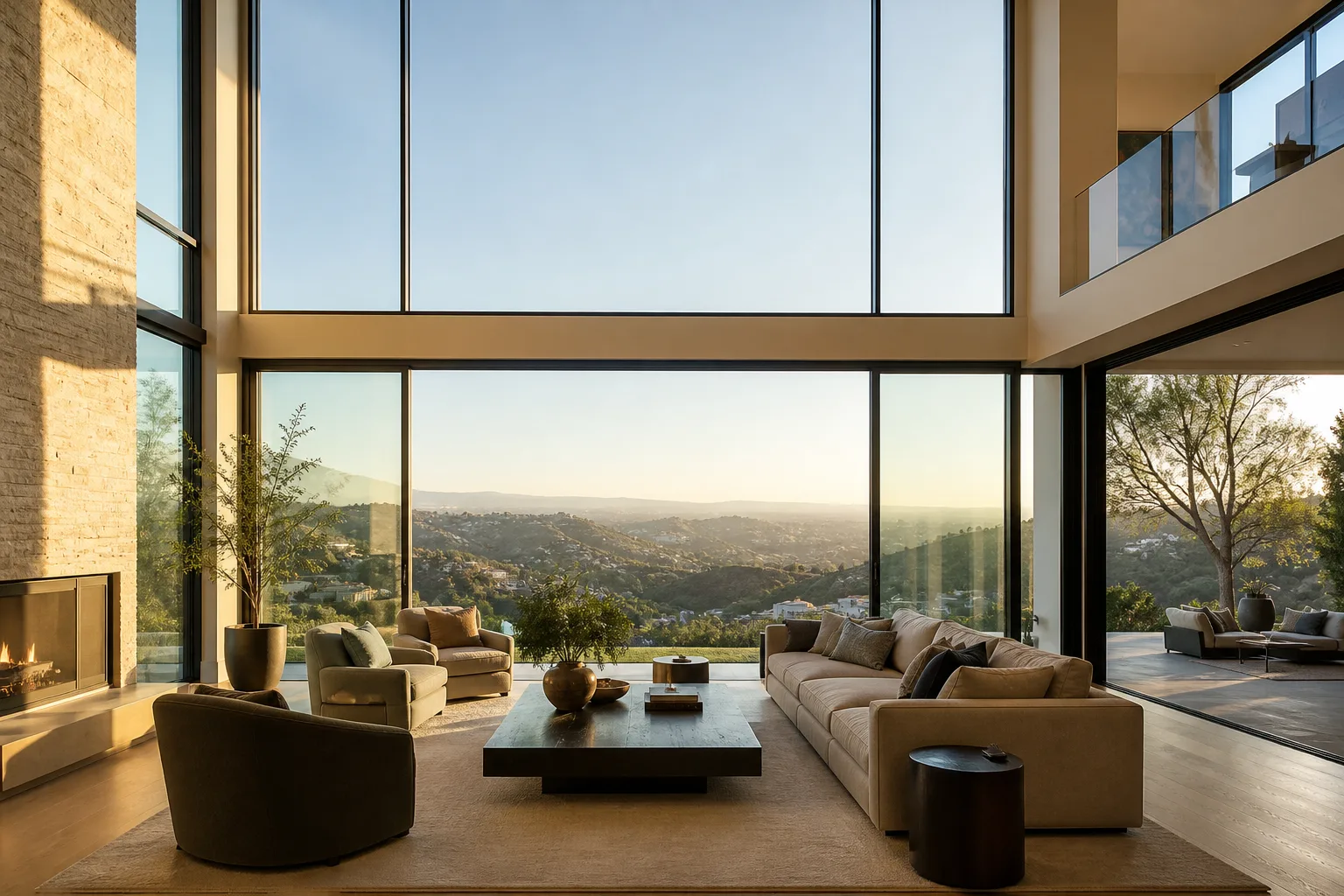
New windows and doors improve comfort, cut energy bills and add long-term value to your home. Juniper Windows Woodland Hills pairs proven product lines with our own installing crews for lasting performance - and a price we put in writing.
Choose your installer
The unit is half the job - the install is the other half. Our own background-checked crews measure, set, seal and insulate every opening, and they know the lines we quote inside and out because they install them every week.
Select the right products
Compare styles, materials and glass packages side by side until the fit is right for your rooms, your budget and your goals. The product-line comparison below is the place to start.
Prepare your home for install
Before install day we walk you through a short checklist - furniture pulled back, treatments down, a clear path to each opening - so install day is watch-it-happen, not scramble.
Compare the Lines We Quote
Every project is priced on the same lines, side by side - the price indicators below are relative, and your consultant shows exact numbers on your actual openings.
PGTThe line Florida homeowners arrive naming - the most Miami-Dade certifications in the industry$$$
- More Miami-Dade NOA certifications than any other line we quote
- WinGuard, EnergyVue and ClassicVue Max systems built for every wind zone
- 99% on-time delivery keeps your install date on the calendar
CGIThe heavyweight impact line$$$$$
- Large-missile impact ratings for the strictest wind zones
- Architectural-grade aluminum with commercial-depth frames
- The line we quote when protection is the whole point
CWSThe Florida value pick$$
- Vinyl systems built in Florida for Florida codes
- Strong energy packages at the friendliest price point
- The smart start for whole-home replacements on a budget
ESWSlim lines, big glass$$$$
- Narrow-sightline aluminum for modern elevations
- Oversized openings and floor-to-ceiling glass
- Impact-rated without the bunker look
ECOThe aluminum impact workhorse$$$
- Miami-built aluminum impact systems
- A strong price-to-protection ratio for coastal homes
- Proven inventory lines with short lead times
Fast, Reliable Window Installation Across Topanga
Window installation in Topanga runs $900 to $2,800 per opening for most homes, with bay and bow units landing between $3,200 and $7,400 depending on glazing and WUI requirements. We schedule Topanga work five days a week, with crews familiar with Old Canyon, Fernwood, and the Saddle Peak corridor. Most canyon installs take one to two days once materials clear the manufacturer. Call (831) 508-3441 for a written quote before anything starts.
Living in the Santa Monica Mountains means your windows do more than frame a view. They hold back ember storms, salt air, and canyon wind. We’ve installed and replaced windows across Topanga for years, and we know which frames survive here and which ones don’t.
Why Juniper Windows Woodland Hills Is Topanga’s Preferred Window Installation Company
Topanga homeowners call us because we give them the coastal-spec and the inland-spec on the same quote, with a written price before anyone picks up a tool. That’s the 365-Day Done Right Promise in action: if a window doesn’t seal, operate, or drain properly after install, we return and make it right for a full year, parts and labor, in writing.
Our Topanga customers deal with a live person when they call, not a voicemail maze. You get a live arrival time you can track, photo updates showing the old window out and the new one flashed and sealed, and a digital invoice you can pay from a link. Every job is covered by the Relay Visibility Guarantee: book in a tap, live arrival time, before-and-after photos, written price, digital invoice.
Sean Mackey runs our crews, and the same background-checked, uniformed technicians who work Woodland Hills and Calabasas jobs handle Topanga installs. We don’t train on your house. We bring eight product lines with us: PGT, CGI, CWS, ES Windows, ECO Window Systems, Mr-Glass, Therma-Tru, and ViewLux. When Topanga’s WUI code calls for fire-rated glazing, we’re not scrambling.
This isn’t a franchise. Juniper Windows & Doors operates under the Relay Home Co. family, founded in 2001, and our Topanga work is dispatched and scheduled from the brand’s Los Angeles office with crews that serve this canyon locally.
Picture Window in Topanga
Picture windows in Topanga run $900 to $2,200 per opening for standard insulated tempered units, climbing to $3,400 or more when you’re framing a view wall with fire-rated or impact-rated glass. What makes a picture window right for this canyon is what goes around it: the flashing, the weep screeds, and the jamb insulation all have to handle 90-degree summer heat followed by January rain. A Picture Window is fixed, non-operable, and exists for one reason: to let you see the ridgeline without a mullion breaking the view.
A sealed, non-operable unit actually holds up better here than a sliding sash because there’s no track for canyon dust to pack into and no hardware for salt air to corrode.
Glazing Specs That Survive Topanga
We specify low-E tempered glass with a U-factor of 0.30 or better for most Topanga picture windows, and we push hard for laminated or impact-rated glazing if the unit faces north toward the 101 and gets hit with airborne debris during Santa Anas. Coastal salt mist from Malibu never reaches the glass but it does eat standard aluminum frames, so we recommend fiberglass or thermally broken aluminum with a marine-grade finish.
When a Picture Window Makes Sense Here
If you live up Red Rock Road or Saddle Peak and your living room faces the canyon, a picture window replaces a drafty 1970s slider without losing the view. Custom post-and-beam homes from the 1950s and 1960s usually have rough openings that aren’t square, so we field-measure every Topanga picture window before ordering.
Bay Window Installation in Topanga
Bay window installation in Topanga costs $3,200 to $7,400 for a three-panel unit with insulated roof and seat, and the price gap between a basic pine bay and a WUI-compliant fiberglass bay with tempered glass is real: the coastal-spec version adds about 40% but won’t rot at the seat board within a decade. A Bay Window Installation projects outward from the wall, giving you three panels of glass and a wider sightline than a flat window can offer.
Here’s what we see in Topanga bays that valley contractors miss: the seat board and roof are where water gets in. January rains hit the bay roof, and if the flashing wasn’t done with marine-grade materials, the seat rots and the whole bay starts sagging.
Structural Reinforcement for Canyon Homes
Older Topanga homes with seismic additions rarely have adequate header support above the bay opening. We check the king studs, add a proper header if one’s missing, and install steel support cables so the bay doesn’t pull away from the wall during the first Santa Ana wind event.
Framing Material for Salt-Air Exposure
We steer Topanga bay window buyers toward fiberglass or aluminum-clad wood, never untreated pine. The canyon’s mix of dry heat and winter moisture expands and contracts pine until the joints open, and once water gets behind the stucco, the repair is a wall job, not a window job.
Trusted Brands We Service in Topanga
We install and service Window Installation products from PGT, CGI, CWS, and ES Windows, with local parts for Topanga customers who don’t want to wait on a distributor in Sylmar. PGT’s Miami-Dade NOA impact-rated units are the most common pick for Topanga because they meet WUI Chapter 7A ember-resistance standards and handle salt air without frame corrosion. CGI’s temperable fire-rated glazing has a place in canyon rebuilds, and CWS gives us a mid-tier fiberglass option when the budget sits between vinyl and aluminum-clad.
Common Window Installation Problems We See in Topanga Homes
- Warped frames from canyon temperature swings. Original aluminum frames from the 1970s crack at welded corners after decades of 30-degree overnight dips followed by 95-degree afternoons. That crack lets water behind the stucco, and by January you’ve got rot at the sill and jamb.
- Corroded hardware from coastal salt air. Salt-laden air from Malibu eats through standard zinc-plated hardware in under five years. Casement operators and sliding door rollers seize, and most homeowners don’t notice until a window won’t close during a smoke event.
- Canyon dust wrecking weatherstripping. Santa Ana winds drive fine dust through worn wool pile and brush seals on double-hung sashes. The dust abrades vinyl tracks until the sash loses compression and rattles, and then someone jams the sash shut and permanently warps the jamb.
- Unpermitted additions with failing sliders. Original sliding glass doors from the 1970s are often still in place on Topanga additions, their aluminum frames corroded by ocean air and their tracks packed with canyon dust. Nearly every replacement now requires Title 24 and WUI documentation.
Pricing for Window Installation in Topanga, CA
Expect to pay $900 to $1,900 for a standard single or double hung window in Topanga, $1,200 to $2,800 for casement or picture windows, and $3,200 to $7,400 for a full bay or bow unit. Fire-rated or impact-rated glazing adds 25% to 40%, and WUI compliance work like ember-resistant venting and flashing upgrades runs an additional $200 to $600 per opening. A full canyon house replacement, depending on glass count and frame material, lands between $9,000 and $28,000. Every quote you get from us is a written line-item price, fixed before work starts, no change orders. Call (831) 508-3441 for your free estimate.
We Also Serve Cities Near Topanga
Our crews handle window installation across the Santa Monica Mountains and the west Valley. We’re in Woodland Hills weekly, Calabasas often, Tarzana and Pacific Palisades when the 101 cooperates. If you’re searching for Window Installation in Topanga but live a few miles over the ridge, we cover that too.
Serving Topanga, CA - Our Local Coverage Area
We’re based in the Topanga area and know this community well. Use the map below to see our service coverage - if you’re nearby, we can almost certainly help.
FAQs About Window Installation in Topanga
Yes, in most cases they do. Topanga sits within a Very High Fire Hazard Severity Zone, and current building code requires any new window or replacement to meet WUI Chapter 7A standards for ember resistance. That means tempered or fire-rated glazing, ember-resistant screens or vents, and frames built from materials that won’t fuel a fire. Even if your original 1972 slider was installed before WUI existed, the moment you replace it, the new unit has to comply. Call (831) 508-3441 and we’ll tell you what your specific opening requires.
Salt air from Malibu travels up the canyon on marine-layer mornings and redeposits on metal wherever the wind slows. That’s why zinc-plated hardware corrodes, aluminum frames pit, and casement operators seize. In Topanga, the salt doesn’t hit your windows all year. It hits during the days when the marine layer pushes inland, and over five to ten years that’s enough to destroy standard window hardware. We specify stainless or marine-grade coated hardware for every Topanga install.
You can, but you shouldn’t. The frame is what holds the glass in place during wind and ember events, and a corroded frame has already lost structural integrity. In the Fernwood neighborhood off Topanga Canyon Boulevard, we replaced a 1970s aluminum sliding door that had been corroded by salt air from the coast, its track packed with canyon dust and the frame pulled away from the jamb, letting smoke and embers from the last Santa Ana-driven brush fire seep into the house. Upgrading now costs less than the water or fire damage that comes from waiting.
Dual-glazed windows don’t meet the fire-rated glazing requirements in Topanga’s Very High Fire Hazard Severity Zone. Woodland Hills, which sits outside the strictest WUI boundaries, can use ordinary dual-glazed units, but Topanga homes often need tempered, fire-rated glazing that resists radiant heat and ember impact. The code difference is based on geography and fire history, not on the age of your house, and we see this catch homeowners off guard on nearly every Canyon rebuild. Call (831) 508-3441 for a quote that matches your Topanga parcel’s WUI map designation.
We specify fiberglass or thermally broken aluminum with a marine-grade finish, never raw aluminum and never pine. Post-and-beam cedar houses in Topanga expand and contract with canyon temperature swings, and redwood sash frames from the 1960s are usually too far gone to rebuild. Fiberglass holds its tolerances through heat and rain, and the marine finish stands up to the salt air without corroding. We match the frame color to the existing redwood tone so the house keeps its original look.
How the Salt Air in Topanga Decides Your Materials
Topanga’s location in the Santa Monica Mountains places most homes within a Very High Fire Hazard Severity Zone, so window installations must meet WUI Chapter 7A requirements for ember resistance and are often required to use tempered, fire-rated glazing with steel or fiberglass frames instead of dual-glazed units common in neighboring Woodland Hills. That’s not a technicality. It’s the difference between a window that holds its frame in a fire event and one that buckles.
But there’s a second force at work in Topanga that no valley contractor thinks about: salt air. It rides the marine layer up from Malibu in the early morning, and it settles on every piece of metal on your house. Standard zinc-plated window hardware lasts about five years here before the rollers seize and the casement operators stop turning. The same aluminum frame that works fine in Tarzana starts pitting and cracking at the welded corners in Topanga within a decade.
So the material conversation in Topanga isn’t about the brand name. It’s about the spec. We quote stainless and hot-dip galvanized hardware, marine-grade frame finishes, and impact-rated glazing as the default spec for most of the canyon. The price gap between the coastal-spec and the inland-spec version of a job runs about 25% to 40%. Cheap now, or pay twice in ten years. That’s the choice.
Juniper is a hardy evergreen built to handle sun, wind, and cold – a fitting name for what windows and doors have to endure in this canyon. If you want a quote that spells out the WUI and salt-air specs in writing, call (831) 508-3441 and we’ll schedule a free estimate.
Written by Sean Mackey, Owner at Juniper Windows Woodland Hills, serving Topanga since 2001.
Six Reasons Homeowners Choose Juniper Windows Woodland Hills
Laminated glass and reinforced frames hold up to wind-driven rain, hail and flying debris, so your openings stay sealed when the weather turns.
Low-E insulated impact glass from our manufacturer lines commonly cuts monthly cooling bills 20-30%.
Laminated impact glass shuts out up to 40% of outside noise - traffic, neighbors, weather.
Monitoring services run $30-90 a month. Laminated impact glass resists forced entry around the clock, with no subscription.
Tighter seals and insulated glass even out hot and cold rooms and stop the drafts at the frame.
A full impact package upgrades curb appeal, buyer confidence and appraised value in one project.